
Eleanor Clarke
OUTDOOR PLANTS
Spotlight On: Foxgloves
One thing we’ll say about Chelsea trends is that, unlike interiors or haute couture, the world of horticulture is a more constant, less fickle one. Ultimately, plants are always in vogue. It’s how we use them that’s changed hugely over the years; how we plant, combine and show them off in different settings. And of course, there’s a limit to the species and varieties that can be coaxed into flower for Chelsea week in late May (even the most cunning of plant nurseries would be hard pushed to bring on their dahlias in time for the show). So foxgloves have been a Chelsea stalwart for many years, as they come into flower naturally towards the end of May bringing their lofty spires of trumpet blooms just as the purple starbursts of alliums are fading and the rose buds are beginning to open.
Foxgloves (Digitalis) tie in perfectly with the trend for wilder, more relaxed planting, at Chelsea and in our own gardens. And we’re totally there for it. They’re gorgeous in a woodland setting, which Jo Thompson illustrated perfectly in her romantic Glasshouse Garden, planting them among ferns and cow parsley, looped elegantly through the light-shade understorey of deciduous trees, a froth of astrantia, dusky pink roses and poppies filling in the sunnier reaches. In this kind of setting, the white and pale pink varieties act as spires of light, illuminating pockets of shade below trees.
Katy Terry’s ADHD Garden piled in the foxgloves too, in a modern take on a cottage garden, the flowers set off perfectly against a rust-coloured woven willow fence. She used Digitalis purpurea ‘Suttons Apricot’, contrasting their tall flower spikes with an array of different umbellifers, firework-blast allium siculum (aka nectaroscordum), claret-pink Geum rivale and the dark copper-purple foliage of shrubs such as black elder and Actaea ‘Chocoholic’.
Foxgloves in your garden
That’s how two of the professionals were doing it this year. But foxgloves are super versatile, and there are so many ways to include them in your garden at home. The first thing to bear in mind is that they’re woodland plants so they don’t like to be in full sun, or really deep shade. Something in between is their preferred environment. An east- or south-east facing bed works well, or the dappled shade cast by birch or ornamental cherry tree, perhaps (white foxgloves pick up the pale trunks of silver birch beautifully).
Wherever you use them, foxgloves perform that vital function in garden design of providing height and vertical accents, directing the eye upwards and bringing drama. In borders, these classic cottage-garden plants make brilliant bedfellows with other late-spring/early-summer performers such as poppies, aquilegia and euphorbias. In a roomy pot (give them a rich loam-based compost and water regularly), they combine well with all kinds of semi-shade lovers, including ferns and smaller grasses such as Stipa tenuissima, Briza media, or, to pick up pink tones, Festuca amethystina, at their feet. Whether they’re in a pot or border, they like good, moisture-retentive soil, so dig in some leaf mould or compost when you’re planting them.
How to sow and grow
Remember that most foxgloves are biennials, which means the seeds germinate and grow to a rosette of leaves in the first year, then produce flower spikes and bloom in the second year. If you cut down the flower spike, you might coax it into flowering for one more year, but that would be at the expense of the plant setting seed… Most, including our native foxgloves, the pink-purple Digitalis purpurea and white Digitalis purpurea albiflora, will self-seed readily, so once you have one foxglove you’ll have them for years to come. Of course they won’t necessarily self seed where you want them, but just dig them up carefully and pop them where you want them to grow and they’ll be none the wiser. Give them a good watering when you move seedlings though – foxgloves don’t like to dry out at any stage of their development. If you have lots of little seedlings around the parent plant the following year, you’ll probably need to thin them out as each one needs a good 30cm radius to itself. Either pot them up, grow them on and replant or move them straight to where you want them to grow. You can also collect the seed from the plants in summer and sow them onto seed trays of damp compost (don’t cover with compost as they need light to germinate), then grow them on individually from there.
Which varieties to plant
There are a few things to bear in mind when foxglove-shopping. The first and most important, perhaps, is height. The native species are the tallest, reaching up to 2m in height, with smaller ones reaching just 30-40cm. Plant the taller varieties somewhere sheltered from strong winds or they’ll need support.
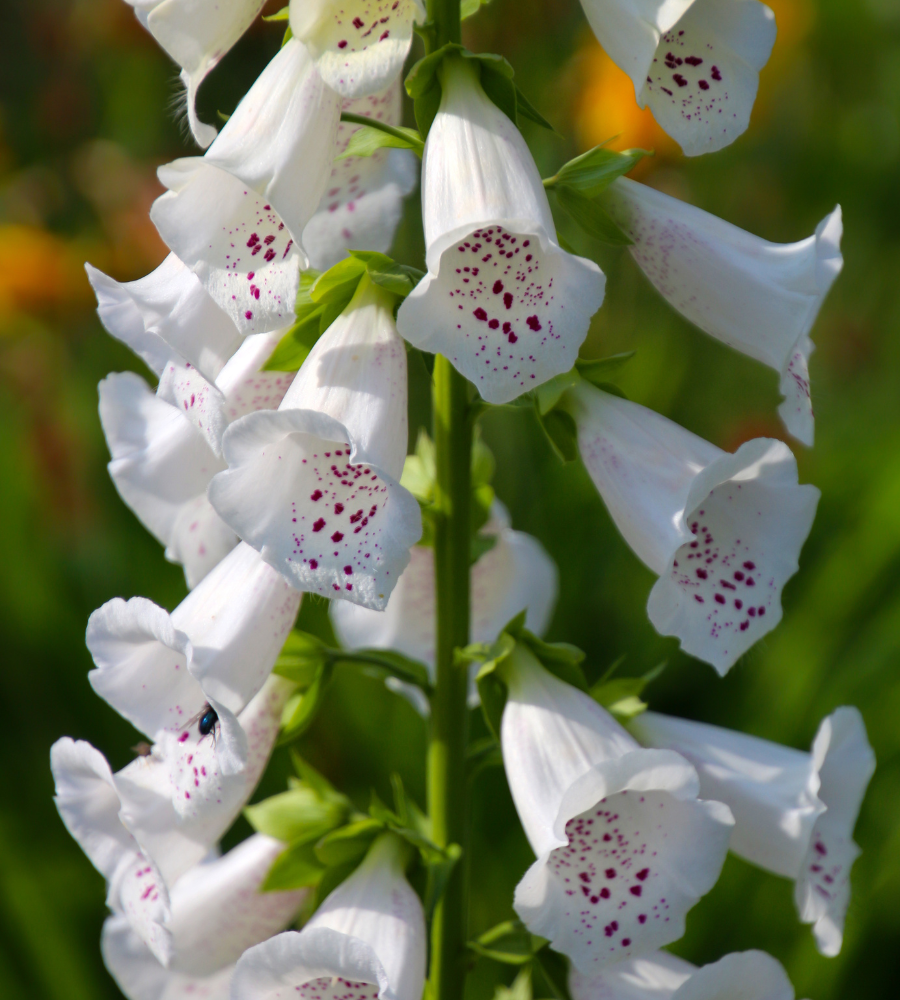
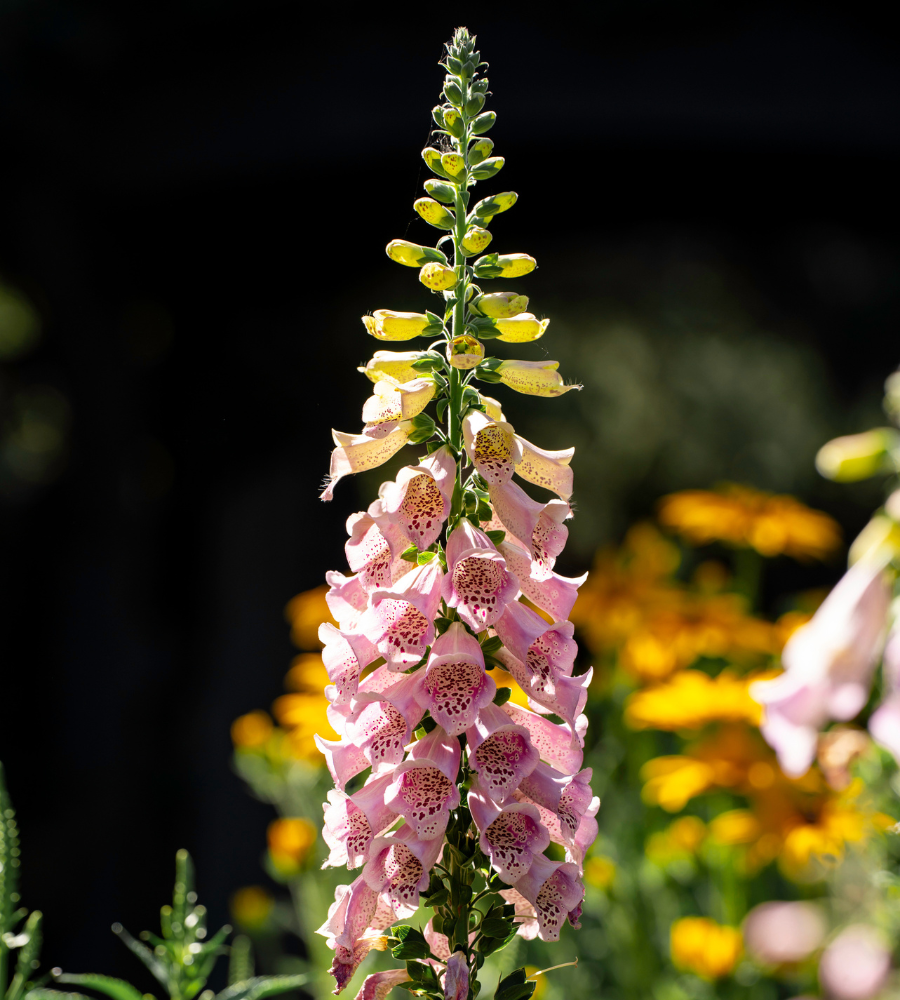
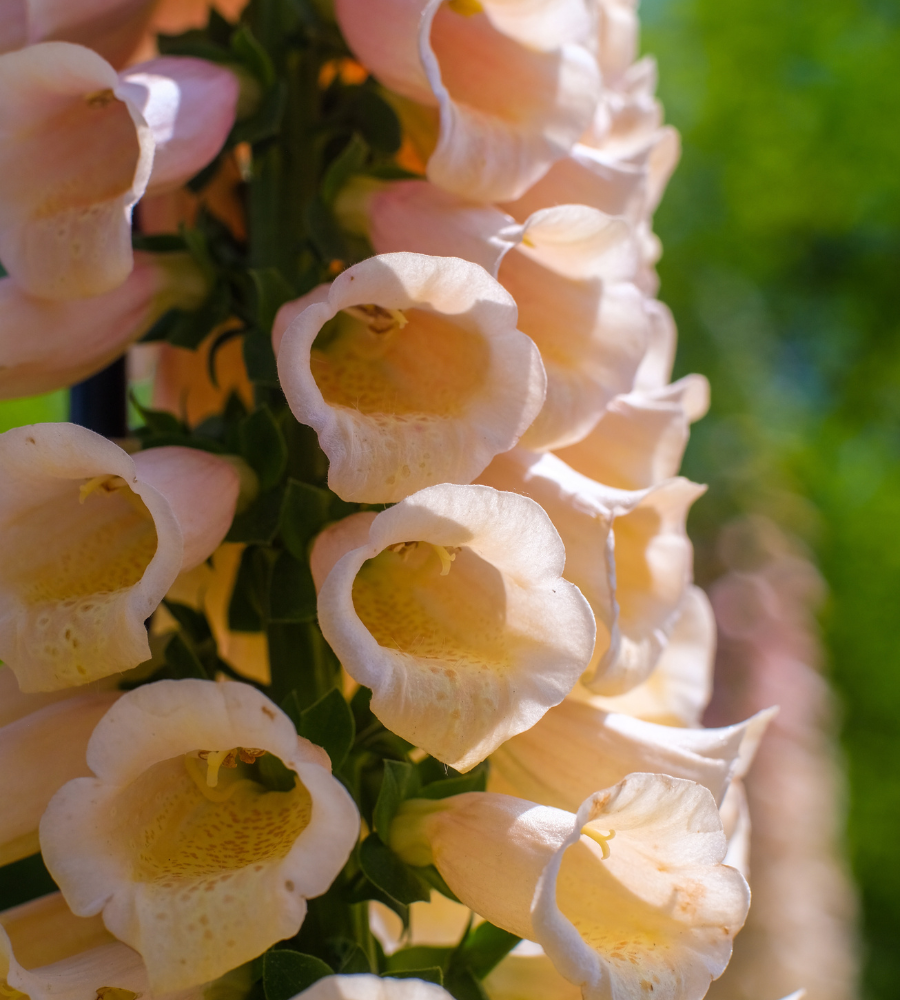
Flower colours range from white to bright pink, apricot pink and shades of yellow, orange and cream. Some are gorgeously speckled, a neat trick that helps bees and other pollinators to find the centre of the flower and pollinate it. Some of our favourite biennial foxgloves are ‘Dalmatian Peach’, 1m tall with rich peach tubular flowers; ‘Camelot Lavender’, another tall one to 1.5m with pale pink flowers with speckled throats; and ‘Sutton’s Apricot’, tall, elegant and a gorgeous soft pink colour.
Some perennial foxgloves (the ones that flower year after year – although most perennial varieties last just a few years) come in yellow and orange. Tall and stately Digitalis ferruginea, the rusty foxglove is one such plant. Another is Digitalis Goldcrest, a really striking peachy gold colour, flowering in mid summer, a little later than the biennial varieties. Digitalis x fulva is another perennial. Also known as the strawberry foxglove, it has been used to produce lots of modern cultivars ranging from strawberry red to purple-mauve, which also flower a tad later than the biennial foxgloves and grow to a more manageable 60-80cm, making them ideal for nearer the front of a border or in windier spots of the garden.
Rare but worth mentioning is the Canary Island foxglove (Digitalis canariensis), an exotic-looking evergreen with short spikes of orange-peach flowers. It’s lovely, but you’ll need to keep it in a greenhouse or similar over winter.
Another wonderful thing about foxgloves is because they’re so popular, new varieties are constantly being trialled and released for sale, giving us – and the bees – ever more options for stately garden joy
At a glance
- Foxglove (Digitalis)
- Biennial or short-lived perennial, generally hardy
- Tall spires with tubular flowers in shades of pink, white and sometimes yellow/orange
- Prefer decent, moisture-retentive soil in semi shade
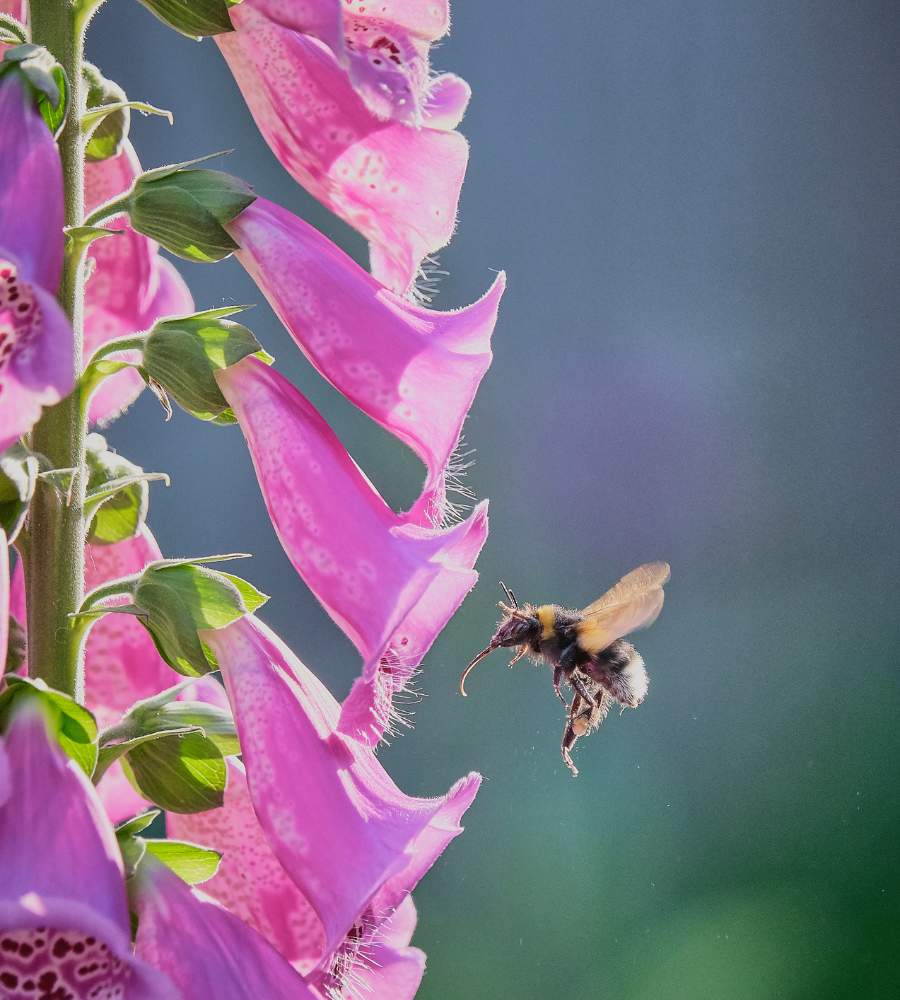
- Nectar-rich so great for bees and other pollinators
- Great in all kinds of gardens and planting designs, bringing height and drama
- Warning: all parts are toxic, so wear gloves