
INTERVIEW
The Secret Language of Plants: An Interview with Dr Hope Werness
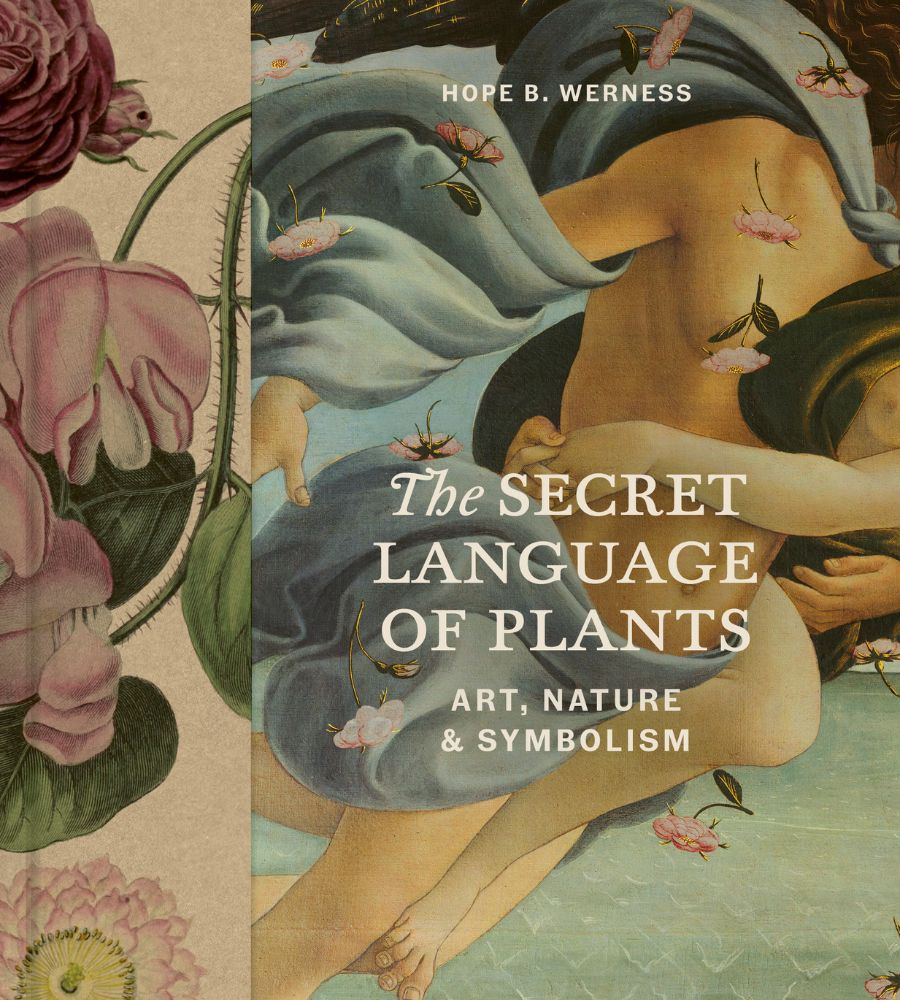
If you’re familiar with our stores, chances are you’ve had a conversation with one of our botanical experts. You may have noticed that we could talk all day about plants and flowers, they are, quite simply, our shared passion. Which is why we were thrilled to receive an early copy of a new book – The Secret Language of Plants, penned by Dr Hope Werness.
This compendium is as fascinating as it is beautiful. Weaving together botany, mythology, folklore, religious texts, and centuries of art and literature, it is a richly illustrated and elegant reference guide that uncovers the cultural significance and symbolic meanings of over fifty plants.
Completely captivated by the book, we sat down with Dr Werness – art historian, writer, and lifelong plant admirer – to hear more about the inspirations behind her work.
Your new book explores the language of plants across different contexts – art, nature, and symbolism. What inspired you to explore this intersection, and where did the idea originate?
I have long been interested in the broader meaning of art, beginning with my dissertation on Van Gogh’s symbolism and most recently with The Continuum Encyclopaedia of Animal Symbolism in Art, published in 2003. It seemed preferable to examine the subject from as broad an approach as possible. As far as where the idea of studying plant symbolism originated, I guess it stemmed in part from living in California, a place of many different environments all rife with plants.
Throughout history, plants have carried a wide range of symbolic meanings across cultures. Did you discover any symbols or stories that have really stayed with you?
Most memorable of all is tree imagery found in nearly all cultures. Particularly the immortal Tree of Life that springs up from the centre and occupies all realms from the underworld to the heavens. This extraordinary image is certainly one of the largest and most powerful of all plant images, indeed, of all images.
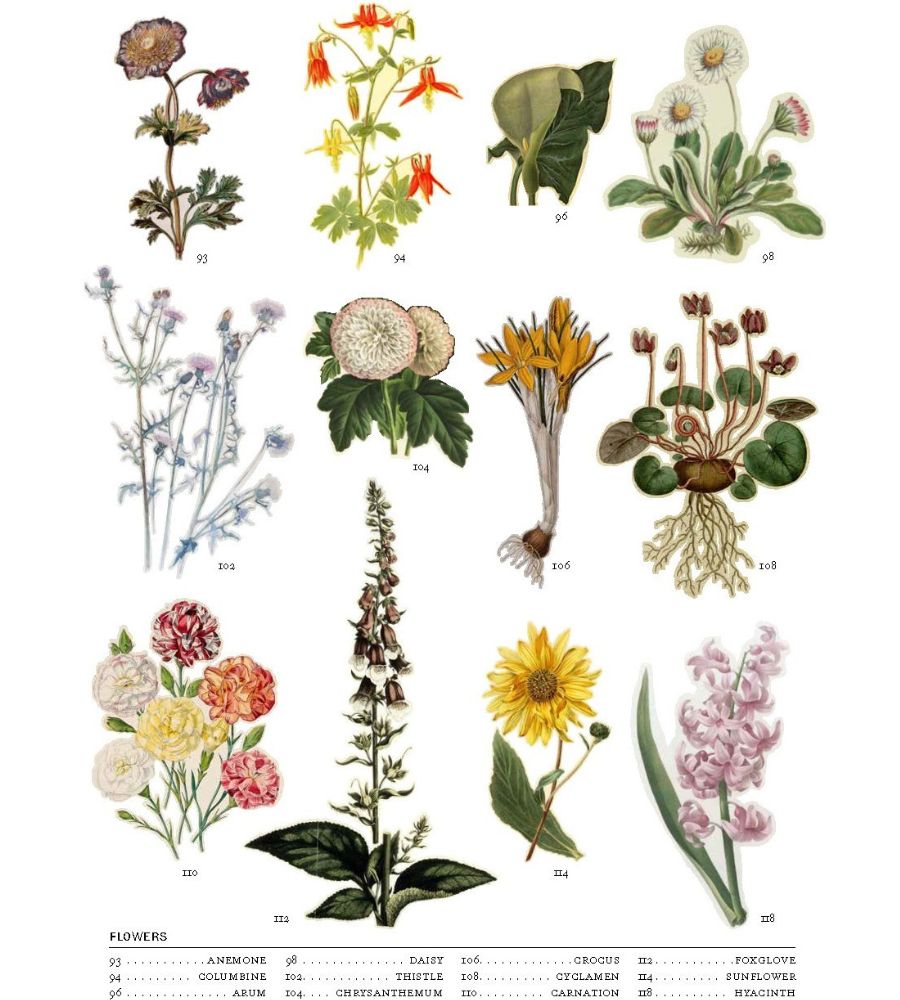
The Secret Language of Flowers – Plant Index
Of the 50 plants you studied, has your research changed your perception of any in particular – perhaps you find one more beautiful or beguiling than before?
Fifty plants made their way into the final manuscript, but there were many others in the initial drafts. As a Californian, I’ve always liked artichokes. The research revealed that the Greek thyrsus, topping Dionysos’ staff, was actually an artichoke, not a pinecone. I also learned from Caroline Murray (Professor Hedgehog) about the plant’s contradictory meanings: sadness, hope for a prosperous future, disappointment and—since it has a heart—love and devotion.
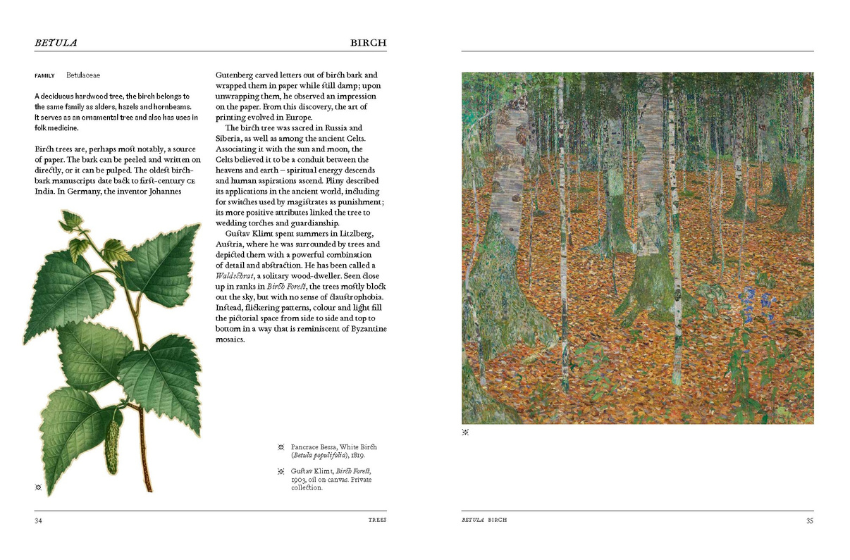
The Secret Language of Flowers – Chapter: Trees, pg, 34
How do you see plants influencing contemporary art today, compared to historical periods such as the Renaissance or the Victorian era?
Most striking of all is the way contemporary artists incorporate plants into their work as a means of drawing attention to the worldwide ecological crisis. They dramatize the ways in which plant-knowledge can help mitigate the effects of human depredation.
Did writing this book change the way you personally observe or experience plants in your environment? Has it made you more green-fingered?
I have become more “green-minded” as a result of writing the book. As earlier mentioned, contemporary thinkers increasingly experience and discuss the significance of plants in the battle to reverse the effects of industrialization.
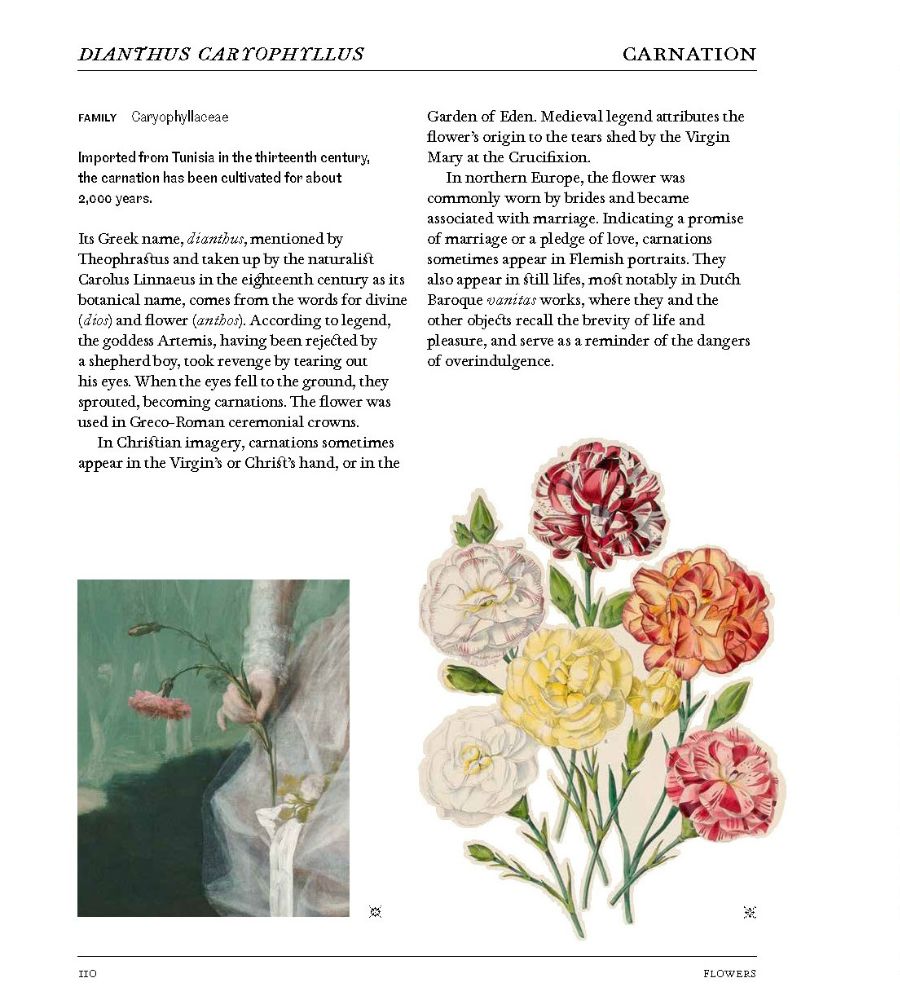
The Secret Language of Flowers – Chapter: Flowers, pg, 110
Could you share your three favourite artworks from the book?
Botticelli’s Primavera, Dion’s Neukom Vivarium, and Grade’s Treeline. The last two are clearly contemporary works that incorporate the ideas and aims discussed above.
What role have plants and flowers played in your life?
The desert cacti were among my favourite memories as a child in Arizona. I was particularly struck by the symmetry of smaller ones. The contrast between delicate flowers and the spiny plant, the greening of the desert following rain was memorable.
For over forty-five years my family lived on a small farm where we operated a humane society dedicated to animal rescue- horses, donkeys, dogs and cats. This was partially supported by growing almonds on the property – California’s Central Valley is one of the largest almond-growing regions in the world.
I had a small garden for vegetables that also featured flowers- marigolds and zinnias especially. I recall how friends and colleagues used to disappear when I showed up with armloads of zucchini. I had many rose bushes and loved to cut the blooms to perfume the rooms of the house.
Finally, my grandfather and uncle worked as landscape architects and my mother trained to be one.
The Secret Language of Flowers by Dr. Hope Werness and published by Thames & Hudson is released on August 28th 2025.
Read more:
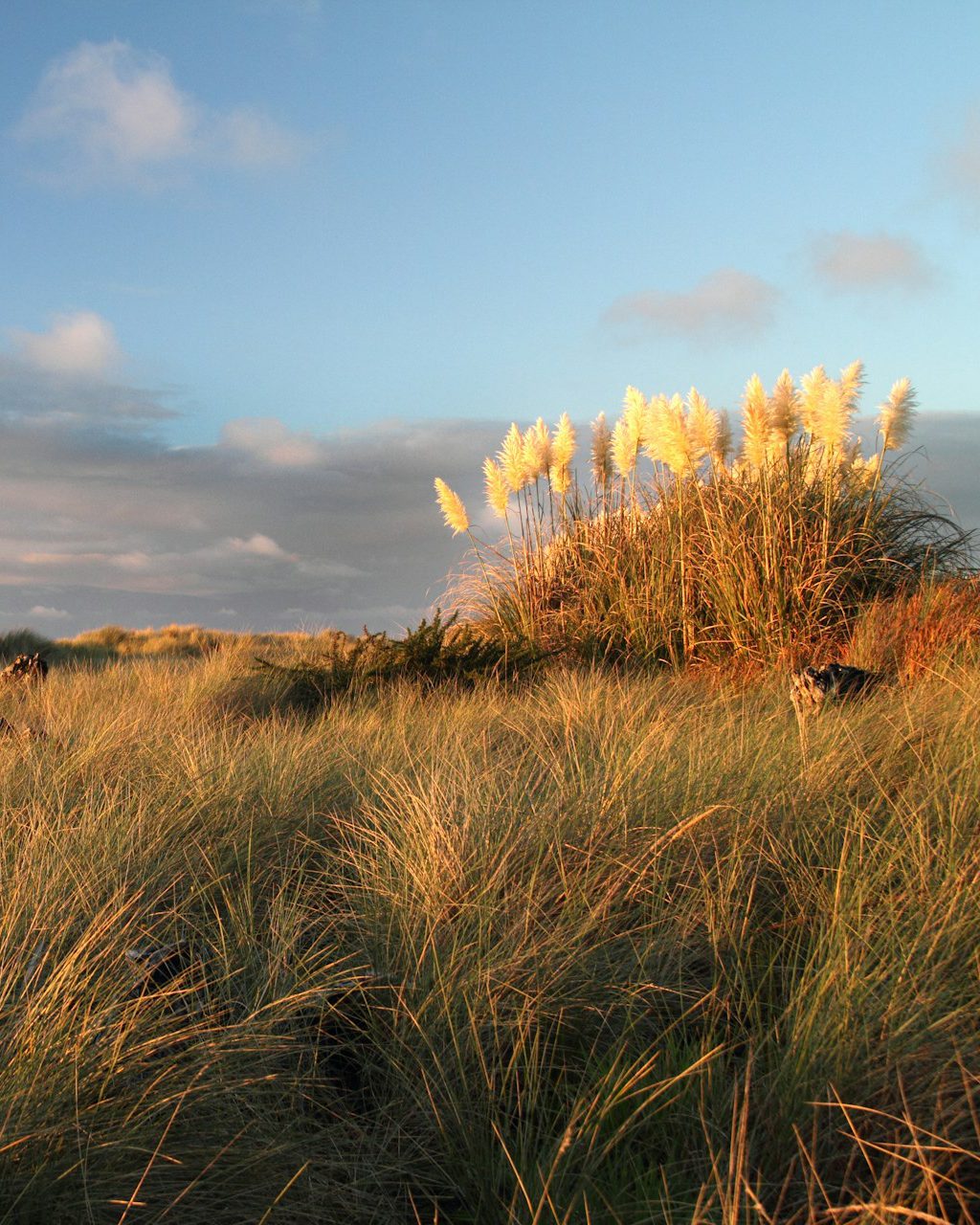
OUTDOOR PLANTS